Research marketplace · Private preview
Real-world evidence, on the patient's terms.
Reach consented, de-identified, continuously-updated cohorts, without ever touching an identified person. Every record is patient-owned. Every lease is receipted, revocable, and deleted when your study ends.
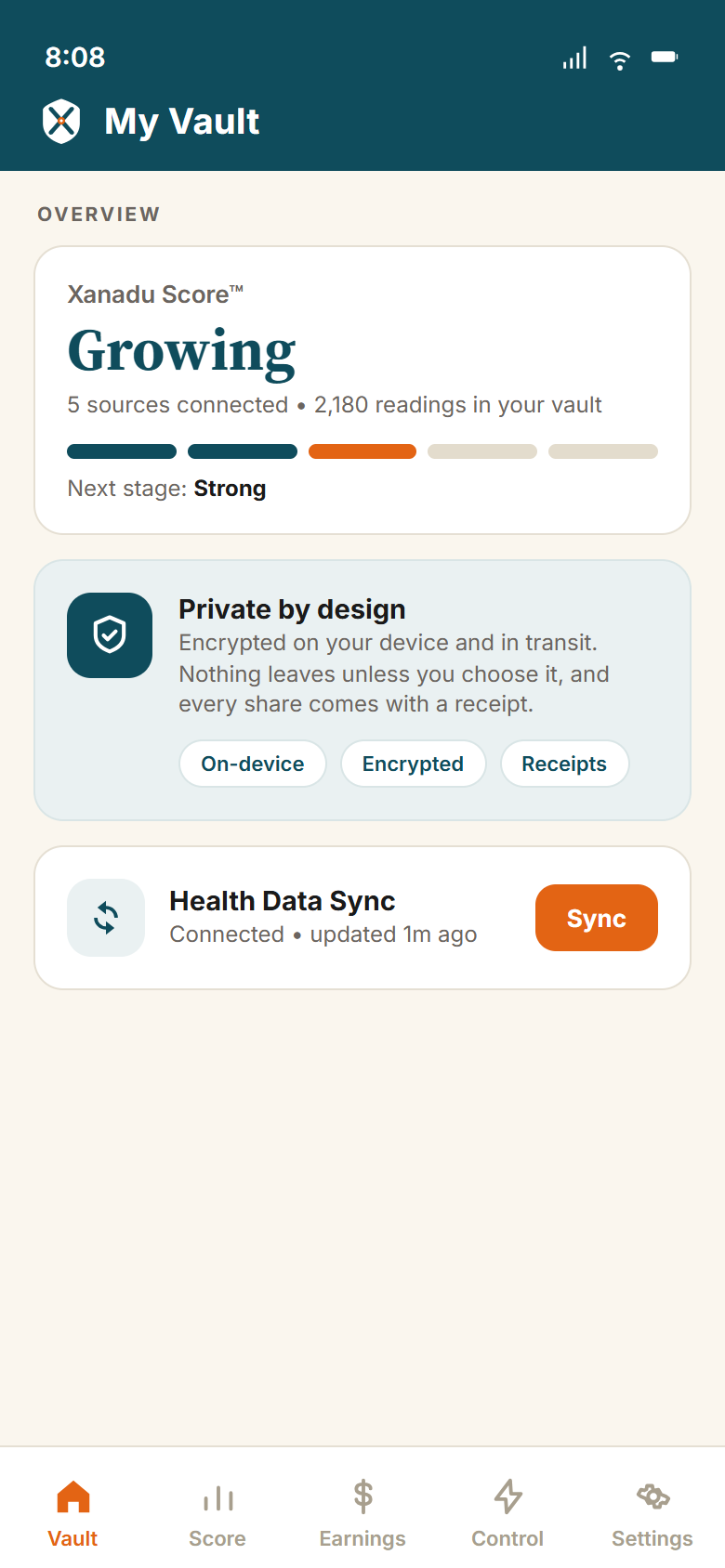
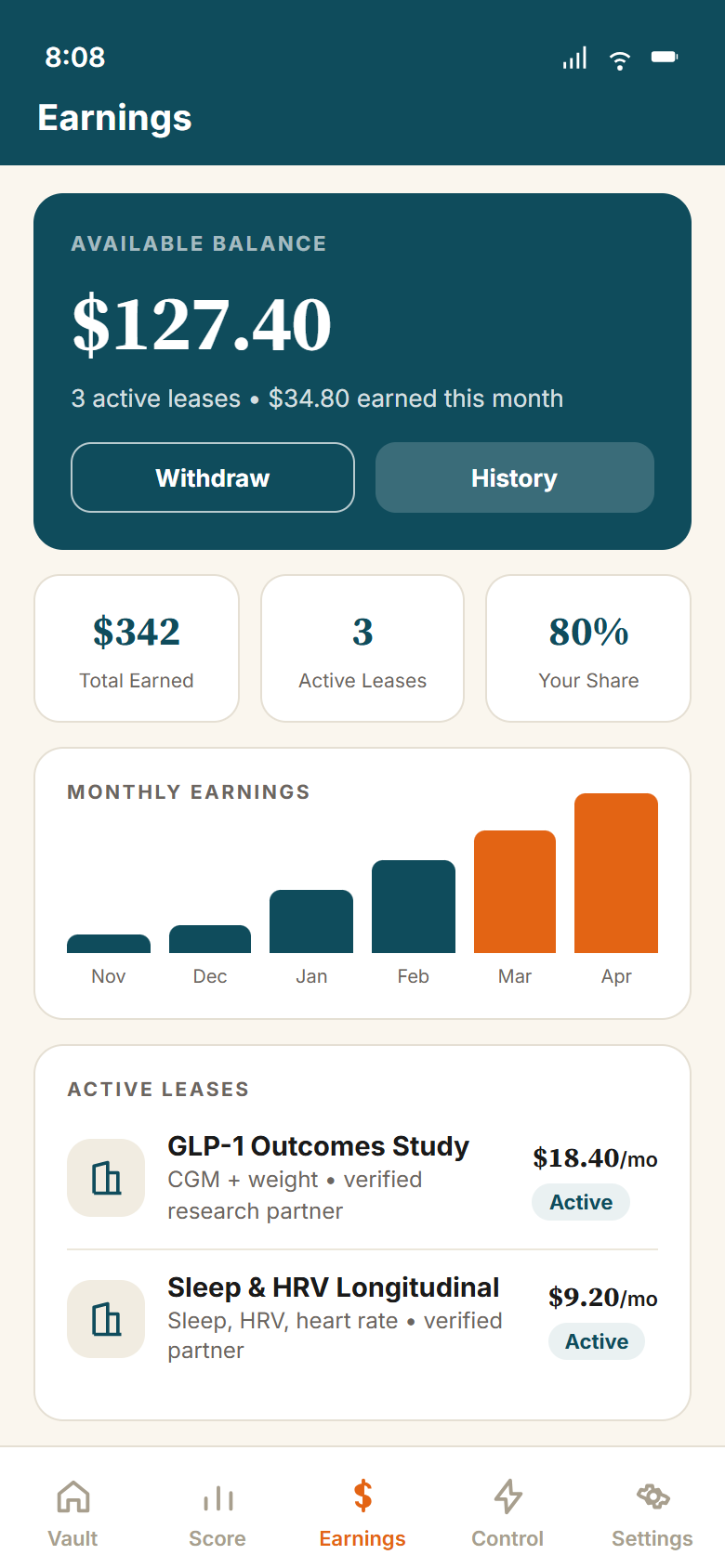
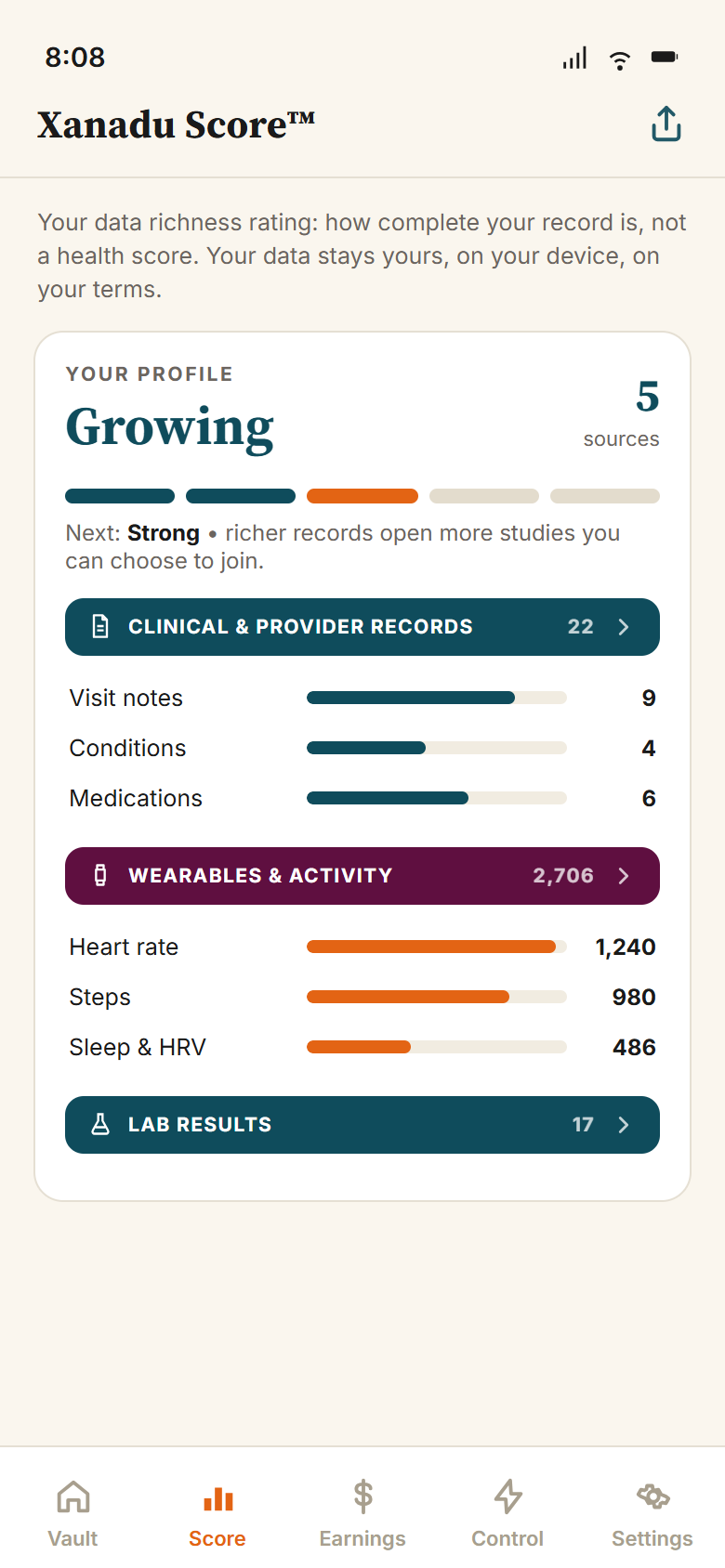
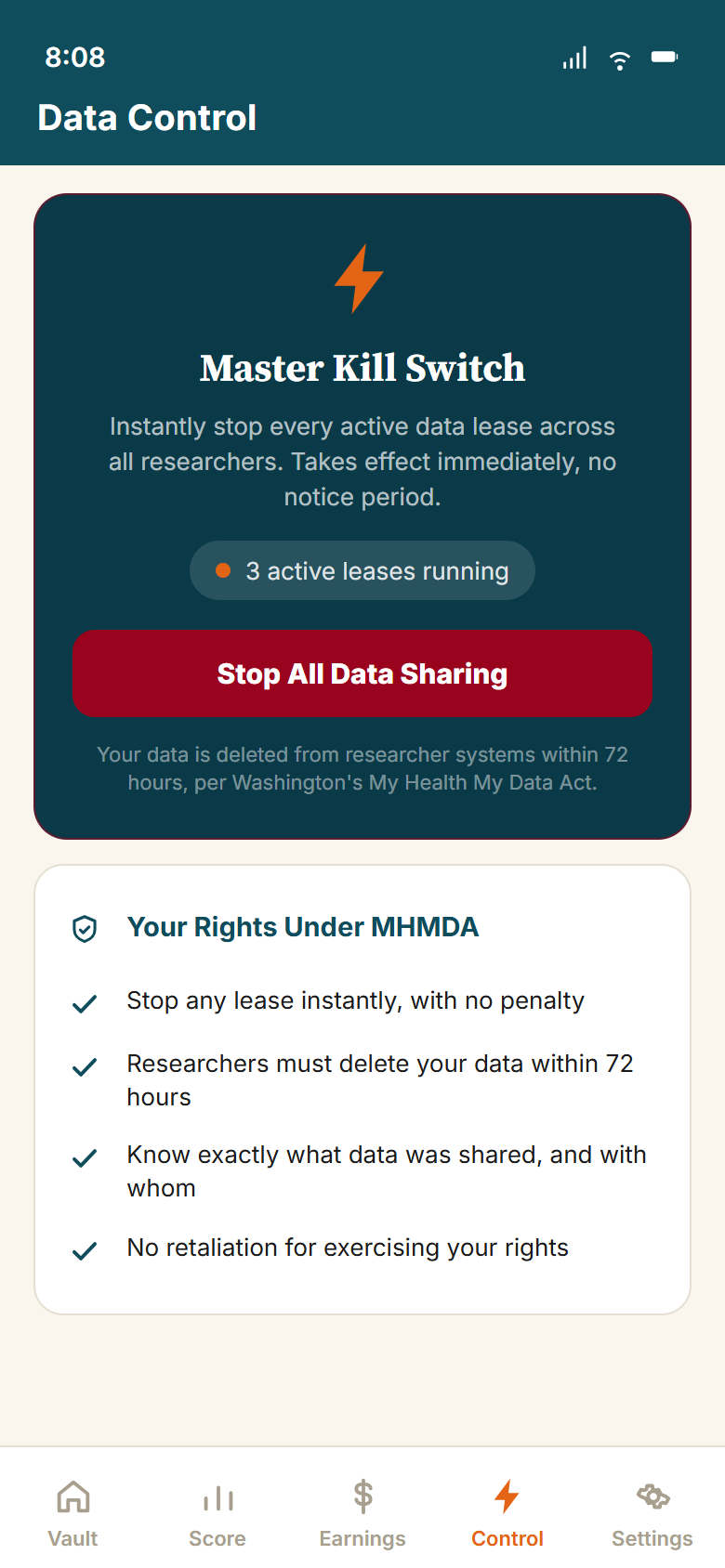
The data is owned by the people it describes. They opt in study by study, they're paid, and they can walk away. That isn't a limitation, it's why the data is clean, current, and genuinely consented.
The north star
Xanadu is the place a person owns their data and decides everything that happens to it.
For researchers and sponsors
Cohorts you can trust, without the data you shouldn't hold.
See de-identified cohorts and counts, never identified people. Check study feasibility before you ever commit.
Longitudinal, not a frozen extract. The record refreshes as members add providers, pharmacy, labs, and devices.
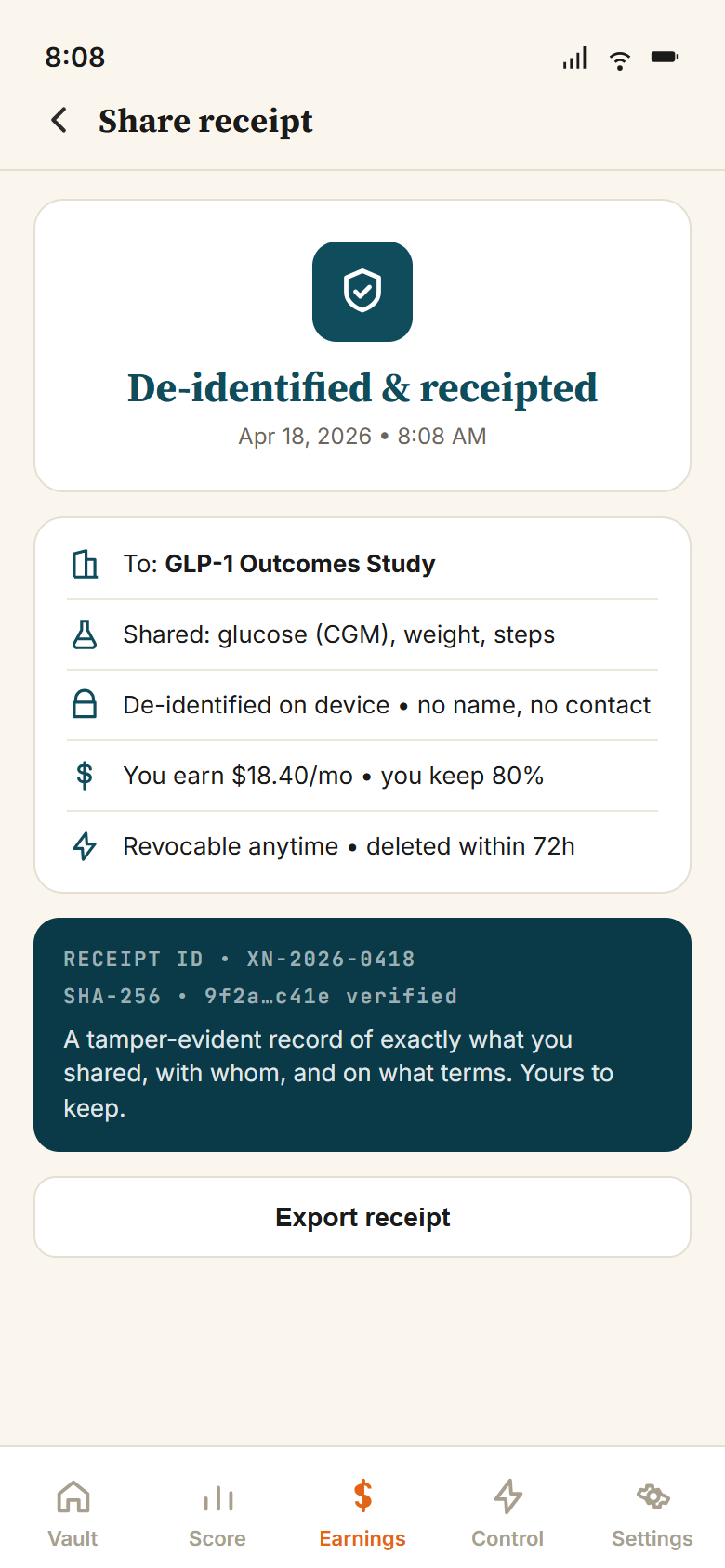
De-identified to the HIPAA Safe Harbor standard. Every lease is receipted, time-boxed, and deleted at study end. Never re-identified, never re-shared.
Providers, pharmacy, labs, and wearables, all normalized to FHIR. Cross-source by default, not stitched after the fact.
Anonymous by default. A member with a rare condition who wants the right researchers to find them makes that choice themselves, on their terms, with a receipt.
The trust model rare-disease communities have been waiting for. See the rare-disease page →
Why the data is better
Engaged people beat a passive panel.
When people own and curate their own records, the data is more complete, more current, and more willingly shared.
A whole-person record over time, not a single claims feed or one health system's slice.
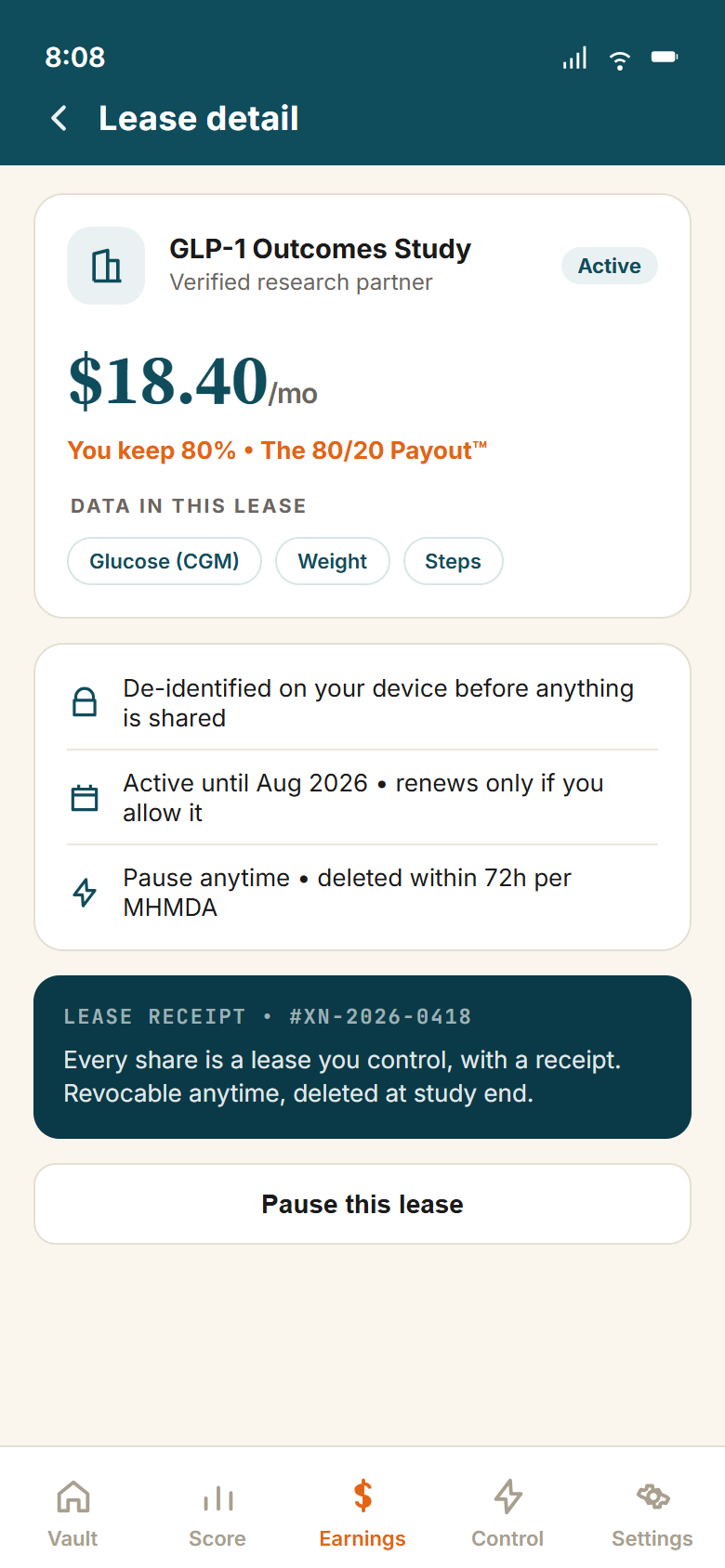
When members accept a study, they keep 80% of what it pays (The 80/20 Payout™), one lease with an end date. People who are paid and in control stay in the study.
Members can choose to be discoverable for the research they care about, so you reach the people who want to be reached.
Why Xanadu is different
Research-grade data. Privacy-first participants. No pipeline to build.
Traditional panels are passive and disengaged. Xanadu participants own their data, curate it actively, and opt in study by study. Here is what that means for your research.
Data stays on the participant's device until they accept your study. That trust model is why they stay enrolled and share more completely.
Members bring full history from providers, labs, and wearables. The depth real-world evidence demands, already assembled.
Every record normalized before it reaches your study. No months of data cleaning, no pipeline to build before you can start.
De-identification runs on the member's device, HIPAA Safe Harbor, before any data is shared. You get the insight, not the liability.
For research networks and builders
Bring your community a research channel they can trust.
If you run a patient community, a registry, or a health app, Xanadu gives you a consented research line: a new revenue and research channel with the patient always in control. You stay the trusted face. We run the neutral plumbing, and never compete with you.
How it works
From question to evidence, with consent at every step.
Describe who you need. See de-identified counts to gauge feasibility, with no identified people involved.
Matching members are invited and choose study by study. Nothing moves unless they say yes, and they're paid.
De-identified to Safe Harbor, delivered under a receipted, time-boxed lease.
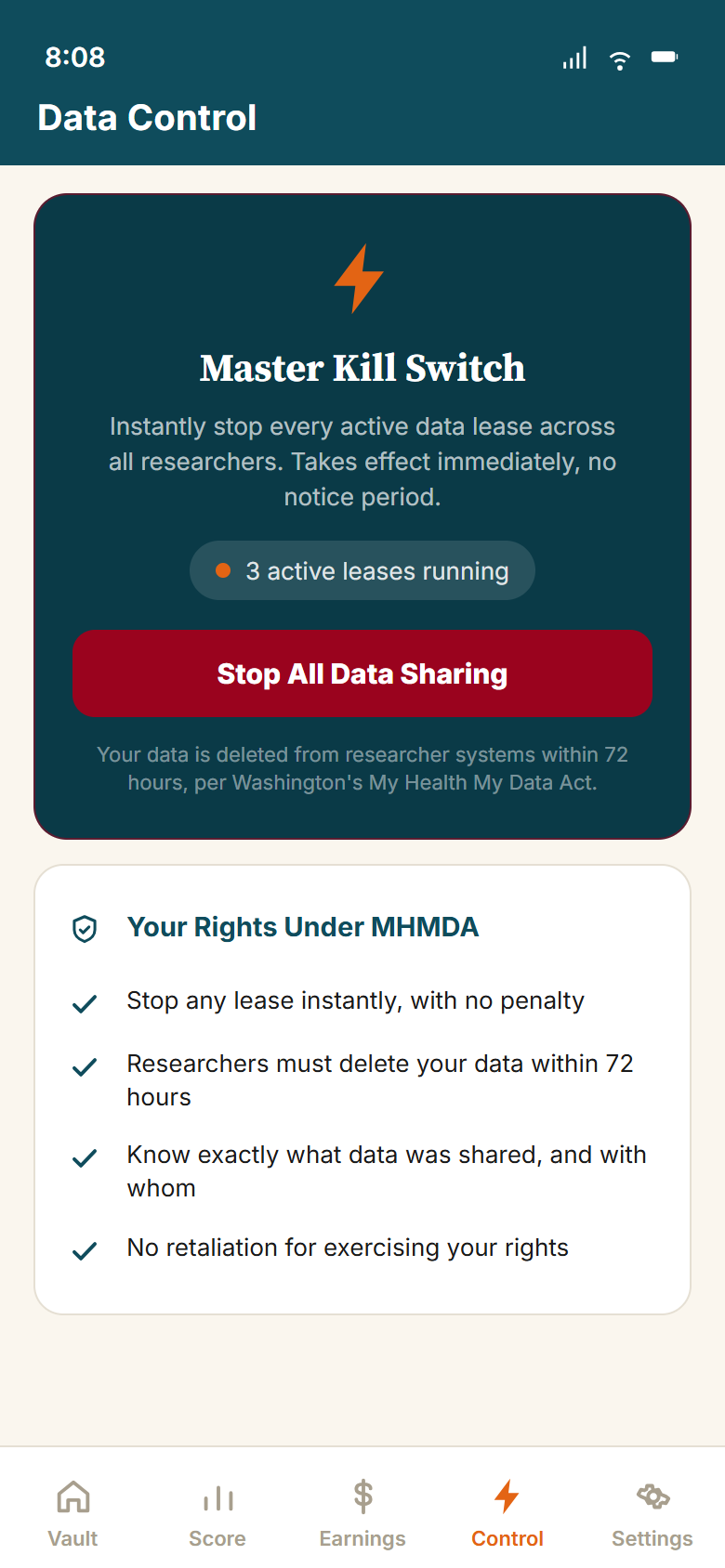
The lease expires, the data is deleted, and members can revoke anytime in between.
The flow, at a glance
How a study runs, end to end.
In development, not yet open for live studies.
This is how the research flow will work. The marketplace is in private preview while we complete de-identification, data-use agreements, and IRB review.
Swipe to see the full flow →
What participants see
Consent you can show, not just claim.
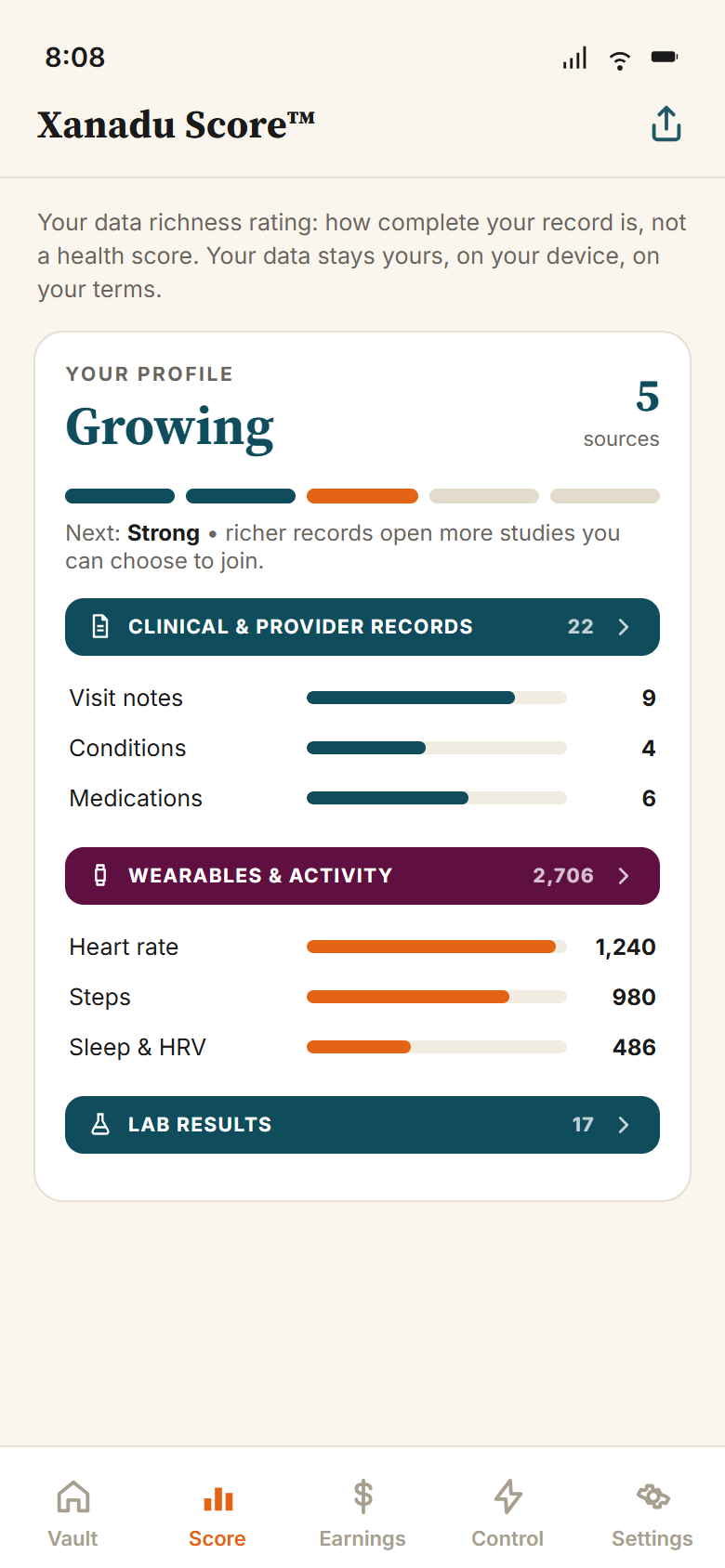
Every member sees exactly what they share, what it pays, and how to stop. That transparency is why participation is genuine, and why the data holds up.
Why we build this
Better evidence, without exploiting the people in it.
Our founder lost his wife seven days after she delivered their third daughter, because warning signs in her data never reached the people who could act. Research that improves care matters here. So does the principle that the people in the data own it, see every use, and are paid. We built the architecture so you never have to choose between the two.
Be first to run studies on consented, patient-owned data.
Or join the early-access list: